About us

Mission

PACS mission is to ease the suffering of stray and feral cats.

As resources allow, PACS will:

  • Educate people regarding the importance of spaying and neutering cats
  • Lobby for humane treatment for stray and feral cats
  • Advise/assist in the rescue of cats in need
  • Manage feral cat colonies using the Trap-Neuter-Return (TNR) model
  • Provide food, shelter, and veterinary care for stray and feral cats, and for feral cat colonies
  • Mentor others who establish a feral cat colony (food, shelter, TNR)
  • Collaborate on projects with other rescue groups

Vision

PACS vision is to establish a cat sanctuary in Nova Scotia.

The long-term vision of PACS is to establish a cat sanctuary in Nova Scotia. The working name of the sanctuary is “Castaways”. The name was chosen to draw attention to the plight of so many cats. Cats in need may be turned away by shelters and volunteer rescue groups because they lack the resources and facilities to help. So who can help these cats; where will they go?

A cat sanctuary is an oasis of safety and kindness; a place where all cats in need can receive food, shelter, medical care, and human kindness. A sanctuary can temporarily house cats as they wait for adoption, or it can be a place where unadoptable cats live out their lives. Cat sanctuaries already exist in many parts of North America. The largest sanctuary is in Canada, in Richmond, British Columbia (a suburb of Vancouver).

In addition to helping cats, “Castaways” would also benefit the community. It would host a pet visitation program, provide tours for school children and public interest groups, educate children and adults about responsible pet care, and be a model of compassion and caring. The sanctuary would also support an active volunteer program, where volunteers of all ages can contribute to a cause, experience caring and fulfillment, and have fun.

A project of this magnitude will require extensive planning, fundraising, and volunteerism. Ideas, special skills/talents, and donations are welcome. Check back for updates; this is a work in progress and there is a very long way to go.

How PACS started

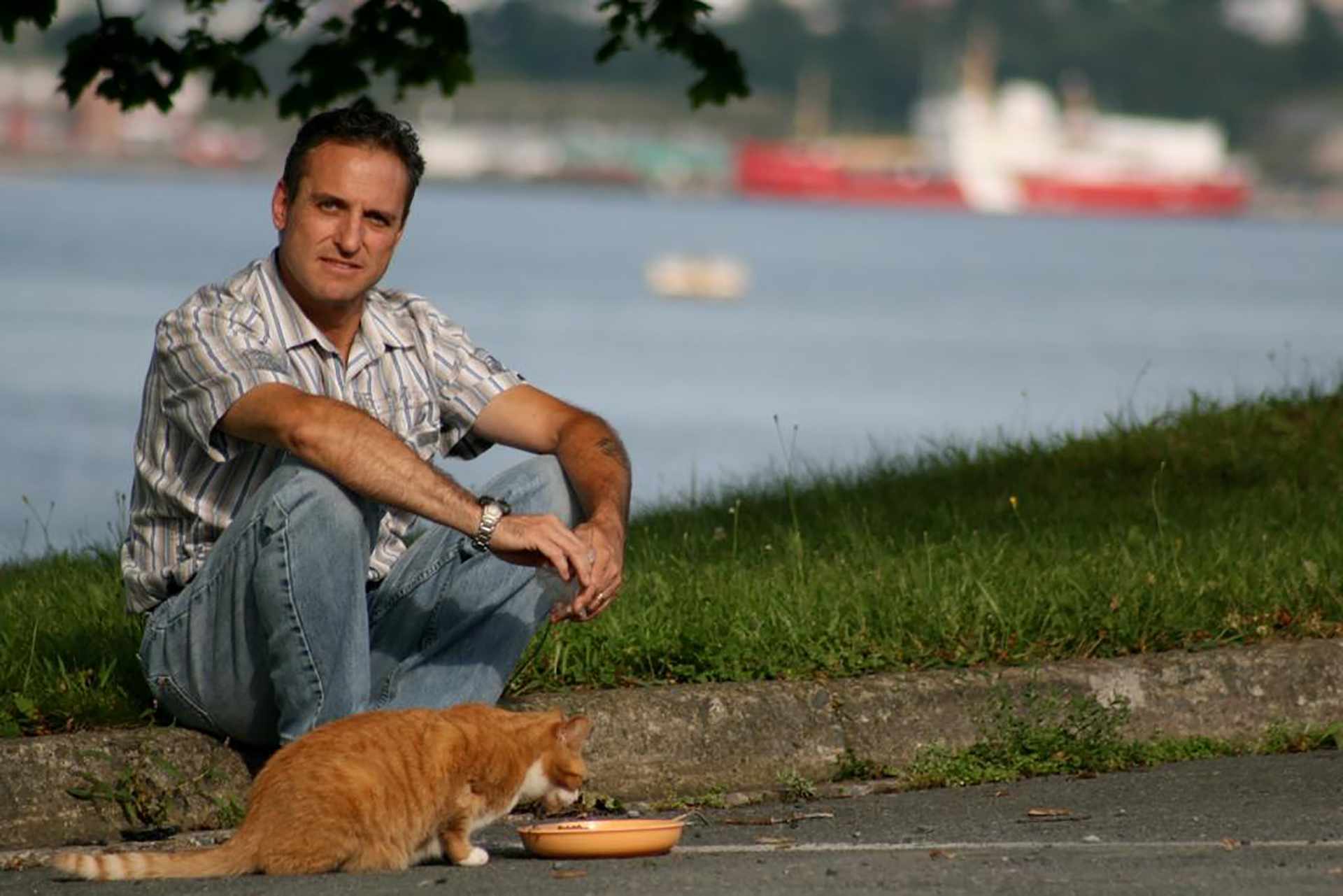
In 2005 Canadian Armed Forces member Pierre Filiatreault saw 2 small kittens outside of his office at HMC Dockyard in Halifax, Nova Scotia. It was not unusual to see cats at the dockyard, but the kittens were notable because they were small, starving, and there was no sign of their mother. Pierre wanted to help them. He caught the kittens, and took them to a local animal shelter. When he followed up the shelter two days later and inquired about them, no one was able to tell him anything. He was frustrated and concerned – what had happened to the kittens he had tried to help?

There had been previous caregivers who fed the cats at the Dockyard, and while some of them were spayed or neutered, there was no organized program. Pierre was dismayed by the conditions in which the cats were living and knew that if something was not done, their population would increase and their situation would deteriorate. Pierre decided that the cats at the Dockyard needed help; he set out to change their lives for the better.

Pierre’s experiences setting up a program to care for the Dockyard cats gave him the opportunity to more fully understand the political and humanitarian issues related to stray and feral cats. In 2007 he founded Pierre’s Alley Cat Society (PACS) so that he could expand his efforts.

PACS partners with other volunteer rescue groups, and lobbies Halifax Regional Municipality (HRM) to deal with stray and feral cats humanely, instead of the inhumane method of trapping and killing the cats. Pierre also serves on the Board of the Nova Scotia SPCA and has been invited to be a consultant in a national initiative to implement Trap-Neuter-Release (TNR) programs to manage feral cat colonies.

PACS Facts

  • Pierre’s Alley Cat Society (PACS) is a non-profit organization located in Halifax, Nova Scotia. Application for registration as a charity is in progress.
  • PACS founding member and current president is Pierre Filiatreault. Pierre has been featured in several magazine and newspaper articles, and interviewed for both TV and radio programs. His work with cats has earned him the name “Catman”.
  • PACS manages feral cat colonies using Trap-Neuter-Return (TNR). Under this model, PACS cares for 40-45 cats at HMC Dockyard, and approximately 50 cats at an undisclosed site in Halifax.
  • PACS has aided in the establishment of at least 4 other feral cat colonies in HRM.
  • PACS collaborates with other non-profit groups on rescue projects, and in the building of shelters for feral cat colonies.
  • PACS often provides advice and/or assistance to individuals wanting to help a stray, feral, or injured cat.
  • PACS has a network of volunteers who participate in fundraising activities and provide foster care for rescued cats and kittens.
  • PACS activities are supported through donations, tribute gifts, cat sponsorship, fundraising events (bake sales, flea markets, community BBQs, etc), and proceeds of the Dockyard Cats calendar sales.
  • The PACS Board of Directors is comprised of caring volunteers who have backgrounds in healthcare, administration, marine engineering, business, and education.
  • Since its incorporation in 2007, PACS volunteers have made a difference in hundreds of feline lives.